 Loading... Please wait...



Save Money. Grow Your Own!
Fast Plain Box Shipping.
We ship to the US & Canada.
Grow Your Own!
7 Hidden AC Problems Your Tune-Up Missed
Posted by Albert F on 16th Dec 2025
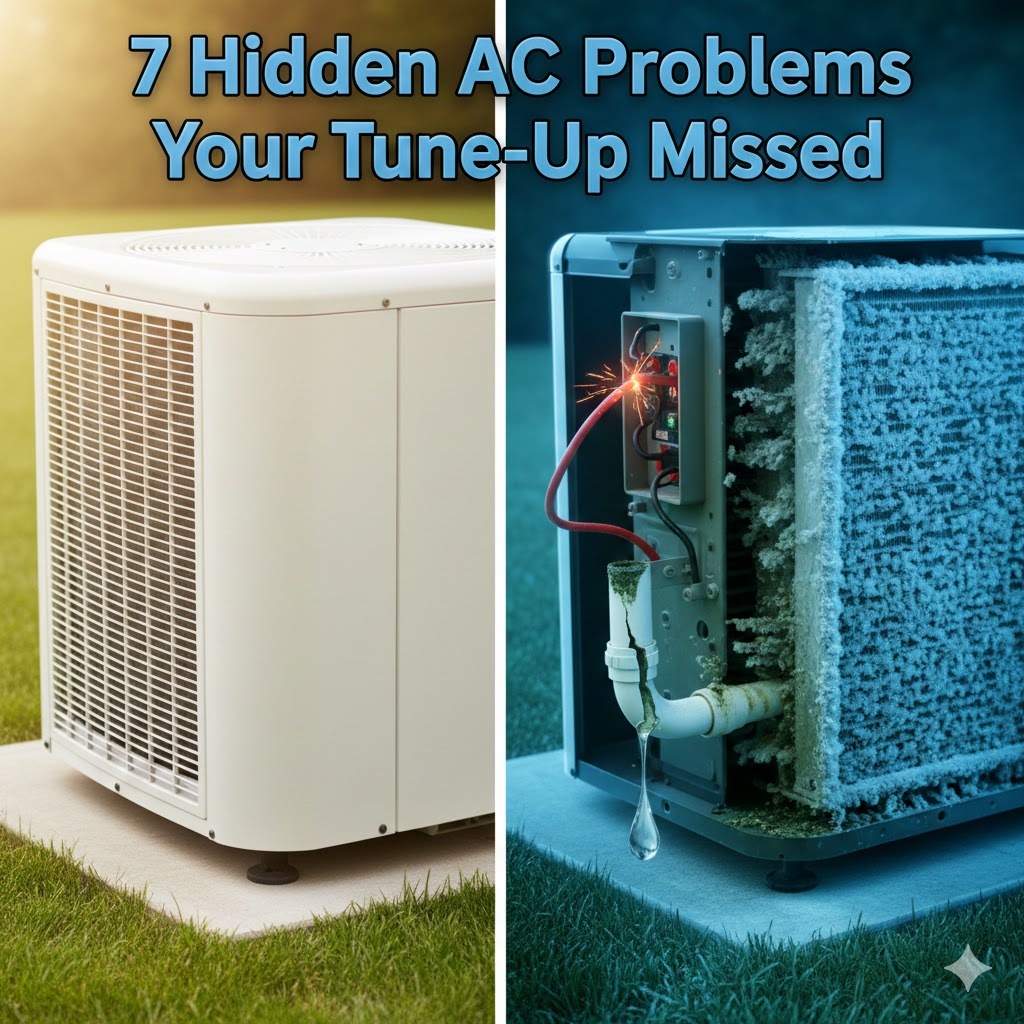
Most homeowners assume that once a technician completes a quick tune-up, their cooling system is “good to go” for the season. The unit starts, blows cold air, and the thermostat reads the right number, so everything must be fine. Yet the home still has muggy rooms, stubborn hot spots, or energy bills that never quite drop. These frustrations often come from deeper AC problems that basic checklists simply never touch.
These hidden AC problems develop slowly inside ducts, behind access panels, and even in the walls of the home. They don’t always cause a dramatic breakdown, so they rarely show up during a fast, surface-level visit. Understanding what a simple tune-up misses gives homeowners a major advantage: the ability to ask for a more thorough inspection and fix the root cause instead of living with “good enough” performance.
1. Quiet duct leaks stealing your cooled air
One of the most costly AC problems hides in ductwork you may never see. Supply and return ducts that run through attics, garages, or tight chases often develop gaps at seams, loose connections, or old tape that has dried out and failed. Every time the system runs, a portion of your cooled air spills into these unconditioned spaces instead of reaching the rooms that need it.
Because the blower still moves air and the vents still blow something cool, a quick tune-up that focuses on the equipment will usually not flag this. The technician may verify temperature at one or two registers, confirm the filter is clean, and move on. Meanwhile, rooms far from the air handler stay chronically under-cooled, the system runs longer than it should, and energy costs creep upward.
Finding and fixing these hidden duct leaks requires more than a flashlight. A thorough inspection may include testing static pressure, checking for telltale dust streaks around joints and registers, and inspecting runs in the attic or crawlspace. Sealing and insulating ducts properly can reclaim a surprising amount of lost capacity and turn uneven rooms into comfortable spaces without replacing the main unit.
2. Oversized systems causing short, ineffective cycles
Another widespread but invisible AC problem is oversizing. Many homes have systems that are too large for their actual cooling load because someone relied on rough rules of thumb or simply matched the previous unit’s size. On paper, “bigger” sounds safer; in reality, it can quietly destroy comfort and shorten equipment life.
An oversized air conditioner tends to short-cycle. It drops the temperature near the thermostat quickly, then shuts off before it has time to pull much moisture from the air. The result is classic: the house feels cool on the thermostat but sticky in real life. Frequent on‑off cycles also hammer the compressor and electrical components, increasing the risk of mid‑season failures.
Basic tune-ups almost never evaluate whether the system is properly sized. As long as pressures look normal, the unit cools while running, and there are no obvious faults, the system passes. To uncover this kind of AC problem, a contractor needs to compare actual run times, assess humidity levels, and perform a proper load calculation based on insulation, windows, orientation, and duct design. Long term, right-sized or multi-stage equipment and controls that encourage longer, gentler runs can dramatically improve comfort and reliability.
3. Airflow bottlenecks your blower cannot beat
Even perfectly sized equipment can underperform when airflow is choked by hidden restrictions. Undersized return grilles, blocked returns behind furniture, doors that close and isolate rooms, kinked flex duct, or restrictive grilles all limit how much air moves through the system. The blower works overtime against high static pressure but still cannot push enough air across the coil.
During a quick tune-up, a technician might feel airflow at a nearby register, note that the blower runs, and move on. What they may not do is measure total external static pressure, compare it to manufacturer limits, or inspect key bottleneck points. To the homeowner, symptoms look like weak airflow in some rooms, noisy vents in others, longer run times, and sometimes icing on the indoor coil.
Solving these airflow-related AC problems means treating the duct system as part of the equipment. That can involve resizing or adding returns, correcting sagging or crushed duct runs, adjusting dampers, and ensuring supply vents are not blocked. Once static pressure drops into the recommended range, the system can deliver its rated capacity more quietly and efficiently.
4. Dirt and biofilm hiding on indoor coils
Filters catch a lot, but they are not perfect. Over time, fine dust, dander, and biological growth accumulate on the evaporator coil and blower wheel hidden inside the air handler. In a humid climate, these components stay damp for long stretches, which encourages a slimy film that acts like insulation. Even a thin layer reduces the coil’s ability to absorb heat and remove moisture from the air.
A basic tune-up often checks the filter, glances inside the cabinet, and maybe wipes accessible surfaces. But many do not remove panels to expose the full coil face or examine the blower wheel blades. The unit may still cool, just less efficiently. The coil runs colder than it should, airflow drops, humidity removal suffers, and energy use rises – all without an obvious “failure” that a quick visit would catch.
Addressing this type of AC problem requires a deeper cleaning. That may involve removing access panels, using proper coil cleaners, carefully cleaning the blower wheel, and verifying that condensate flows freely after cleaning. Once those internal components are restored, homeowners usually notice stronger airflow, drier air, and shorter run times for the same level of comfort.
5. Thermostat locations that lie about comfort
Thermostats are often treated as simple on/off switches, but their placement and setup can create deceptive AC problems. A thermostat on a sun‑baked wall, near kitchen appliances, in an isolated hallway, or right below a supply vent will sense temperatures that do not represent the main living areas. The system then turns off or on based on a skewed reading.
Quick tune-ups typically confirm that the thermostat responds, communicates with the system, and reads close to a handheld thermometer. What they don’t always evaluate is whether the thermostat’s location explains why bedrooms sleep hot while the hallway feels like a fridge, or why the unit seems to run constantly every afternoon when sunlight hits that wall.
Improving thermostat performance can be as simple as moving it to a more central, shaded interior wall away from vents and heat sources. Upgrading to a programmable or smart thermostat with learning capabilities, multi-stage logic, or remote sensors can refine run times even further. Solving these control-related AC problems helps the system run when the whole house needs cooling, not just when one odd spot does.
6. Condensate line troubles waiting to overflow
Your air conditioner removes gallons of water from the air on a hot, humid day. That water collects in a drain pan and flows through a condensate line to the outside or to a drain. In dark, wet spaces, algae, sludge, and debris slowly build up inside that line. At first, the water still moves, so nothing looks wrong. Then one day, the line clogs enough to back water into the pan.
Many tune-ups look for standing water or obvious leaks but do not proactively flush the condensate line unless there is already an issue. That leaves one of the most common AC problems quietly developing in the background. A partially clogged line can reduce the efficiency of moisture removal and, once blocked, can cause pan overflows, ceiling stains, wall damage, or shut the system down if a float switch trips.
Preventing this is simple but requires intention: regularly clearing the line, cleaning the drain pan, and confirming that safety switches function correctly. Treating the condensate system as a priority, not an afterthought, keeps both humidity control and water management under control and avoids emergency calls during peak heat.
7. A leaky building envelope overloading the system
The last hidden AC problem has nothing to do with the equipment itself and everything to do with the building it serves. Gaps around doors and windows, unsealed attic penetrations, leaky recessed lights, and poorly insulated attics all allow hot, humid outdoor air to sneak inside. Every crack increases the load your AC must handle.
Standard tune-ups stop at the mechanical box and its immediate connections. They rarely consider whether the house is acting like a sieve, letting in a constant stream of new heat and moisture. From the homeowner’s viewpoint, the system seems to “run all day and never catch up,” or certain rooms stay humid and uncomfortable. The instinct might be to blame the AC size or age when the real culprit is uncontrolled infiltration.
Addressing envelope-related AC problems begins with air sealing obvious gaps, adding or upgrading attic insulation, and sometimes conducting a more formal home performance assessment. Tightening the building reduces the workload on the system, which can then cycle less often, maintain steadier temperatures, and do a better job controlling humidity. When the home shell and the AC work together, comfort and efficiency both climb.
Why a deeper check beats a quick tune-up
A quick tune-up verifies that your air conditioner turns on, runs, and does not present immediate safety risks. What it does not guarantee is that the system operates anywhere near its potential for comfort, efficiency, or longevity. The most impactful AC problems live in the gray area between “working” and “working well” – duct integrity, airflow, coil cleanliness, thermostat strategy, condensate management, and the building envelope.
Requesting a more comprehensive evaluation that looks beyond the equipment itself can transform how your system performs. A detailed inspection can prioritize which AC problems to fix first for the biggest payoff: sealing key duct leaks, correcting airflow bottlenecks, cleaning hidden components, optimizing thermostat placement, flushing the condensate line, or tightening the home’s shell. Once those invisible issues are brought to light and addressed, the same piece of equipment can feel like a completely different system – quieter, more comfortable, more reliable, and far less expensive to run.