
Grow Your Own Food: A Simple Guide to Hydroponics
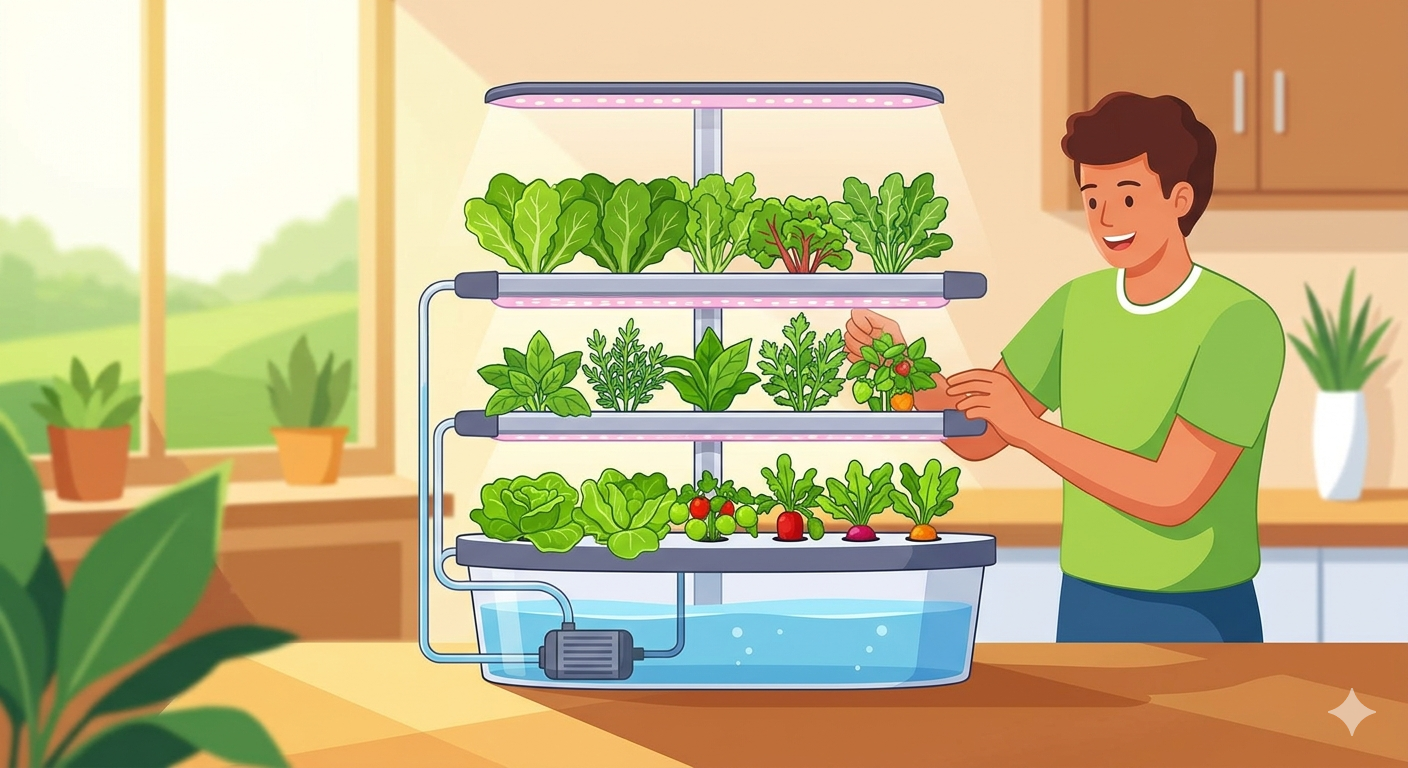
Discover the Power of Hydroponics
Imagine having a garden that grows fresh, flavorful food year-round, regardless of the weather or your lack of a backyard. This isn't a dream; it's the reality of hydroponics! This innovative method of growing plants in water, without any soil, has taken the world of home gardening by storm. It's a clean, efficient, and incredibly rewarding way to produce your own fruits, vegetables, and herbs.
Whether you're a complete novice or a seasoned gardener looking for a new challenge, this guide will walk you through everything you need to know about setting up and running your own successful hydroponic garden. Get ready to embrace the future of sustainable home farming!
What is Hydroponics? A Simple Explanation
The word "hydroponics" might sound complex, but its core principle is simple. It translates from Greek as "water working" (from hydro, water, and ponos, labor). This method of soil-less agriculture uses a nutrient-rich water solution to deliver essential vitamins and minerals directly to a plant's roots.
In traditional soil gardening, plants spend significant energy developing vast root systems to seek out nutrients and water within the earth. Hydroponics eliminates this struggle. By providing everything a plant needs in an easily accessible aquatic form, it can focus its resources on growing strong stems, vibrant leaves, and abundant produce.
Why Choose Hydroponics Over Soil?
You might wonder why anyone would ditch a technique used for thousands of years. The answer lies in the multiple advantages hydroponics offers, especially for home growers and urban dwellers:
- Growth is Often Faster: Since plants don't have to "work" to find their food, they often grow faster, leading to quicker harvests.
- Higher Yields: Optimal nutrient levels and a controlled environment can result in much larger, more prolific harvests.
- Efficient Water Usage: Hydroponic systems recirculate their nutrient solution, making them significantly more water-efficient than traditional gardening, which loses much to evaporation and runoff.
- No Pests or Diseases from Soil: Common soil-borne diseases and many pests are eliminated, reducing the need for harsh pesticides.
- Space-Saving and Versatile: You can set up a hydroponic garden indoors, on a balcony, in a garage, or even on a rooftop, making fresh food accessible to everyone.
- Year-Round Growing: By controlling the environment with grow lights and temperature, you can enjoy fresh, home-grown produce even in the depths of winter.
Now that you're inspired by the possibilities, let's explore the different types of hydroponic systems you can build or buy.
The Different Types of Hydroponic Systems
Hydroponics is not a one-size-fits-all approach. There are several different methods, each with its own advantages and complexity. Here are the most common systems suitable for home use:
1. Deep Water Culture (DWC)
This is one of the simplest and most cost-effective hydroponic systems, making it excellent for beginners.
How it Works:
- A plant's roots hang directly into a reservoir filled with a nutrient solution.
- The system is "active," meaning it requires a small air pump and air stone to oxygenate the water. This is crucial; roots need air as much as water to prevent them from "drowning" or developing root rot.
- Plants are suspended in a net pot filled with a soil-less growing medium (like clay pebbles).
Pros: Low cost, easy to set up, minimal maintenance. Cons: Not suitable for large plants with extensive root systems, requires continuous power for the air pump.
Best For: Small leafy greens (like lettuce), herbs, and some fast-growing, water-loving vegetables.
2. Ebb and Flow (Flood and Drain)
This is another versatile system, widely used by serious home growers. It's slightly more complex than DWC.
How it Works:
- Plants are placed in a growing tray (a "grow bed") filled with a neutral growing medium (like rockwool, perlite, or coconut coir).
- A nutrient solution is periodically pumped from a separate reservoir into the grow tray, flooding it to a certain level. This nutrient-rich water remains for a short time, giving roots access to nutrients and moisture.
- After a set time, the pump is turned off, and the excess solution drains back down into the reservoir.
Pros: Very versatile; can be used for a wide range of plants. The "ebb and flow" action delivers both water and oxygen efficiently to the roots. Cons: The pump can be noisy. Timing is critical; if the system fails or isn't set up correctly, plants can dry out quickly.
Best For: Almost any plant, from leafy greens to heavier producers like tomatoes and peppers.
3. Nutrient Film Technique (NFT)
This system is commonly used in commercial hydroponic operations but can be adapted for home use.
How it Works:
- A very shallow "film" of nutrient solution constantly flows along a shallow trough or channel (often a PVC pipe with holes cut out for plants).
- Plants are held in small net pots, and their roots extend down to the bottom of the channel, where they absorb nutrients from the flowing water.
- The nutrient solution is continuously pumped up to one end of the channel and returns to the reservoir at the other end.
Pros: Efficient nutrient delivery, low water usage (the constant flow means less loss from evaporation). The roots receive excellent oxygen from the air above the water film. Cons: More complex to set up. Requires consistent flow; any failure in the pump can be disastrous for plants in a very short time.
Best For: Smaller, fast-growing plants like herbs, strawberries, and certain lettuces.
4. Drip System
This system is highly adaptable and can be scaled for larger plants.
How it Works:
- Plants are grown in a growing medium in individual containers or on a shared tray.
- A small-diameter tube with "emitters" (like tiny holes or drip stakes) delivers the nutrient solution directly to the base of each plant.
- The system can be a non-recovery (run-to-waste) type, where excess solution is not recycled, or, more commonly for home use, a recovery type, where the excess is returned to the reservoir.
Pros: Offers excellent control over nutrient delivery. Can accommodate plants with varying water and nutrient needs. Cons: The emitters and fine tubes can become clogged, requiring regular maintenance. The system is more complex, with more components that could potentially fail.
Best For: Larger plants with significant root systems, like peppers, cucumbers, and even small trees.
5. Aeroponics
While not a purely "water" based system, aeroponics is a fascinating variation.
How it Works:
- Plants are suspended in a closed environment where their roots are not submerged in anything.
- Instead, high-pressure misters or foggers create a fine, nutrient-rich mist that is periodically sprayed onto the exposed roots.
Pros: This method maximizes oxygen exposure, which can lead to incredible growth rates. It uses even less water than other hydroponic methods. Cons: The most complex and technologically advanced of the home systems. The misters are prone to clogging, and any system failure can be critical.
Best For: Leafy greens, herbs, and any plant that thrives on maximum root oxygenation.
Key Components of a Hydroponic System
Regardless of which system you choose, they all share common components:
- Nutrient Reservoir: A container to hold your nutrient solution (can be a tote, a large bucket, or a dedicated tank).
- Growing Medium: A neutral substance that holds moisture and supports the plant's roots (options include clay pebbles, rockwool, perlite, coconut coir, and vermiculite).
- Net Pots: Plastic pots with small holes through which roots can grow, holding the growing medium and the plant.
- Nutrient Solution: A water-based solution containing all the essential vitamins and minerals your plants need.
- Water Pump: To move the water from the reservoir to the plants (essential for all systems except sometimes DWC).
- Grow Lights: Provide the necessary light spectrum for photosynthesis, especially important for indoor setups.
- Airstone and Air Pump: Essential for Deep Water Culture systems to oxygenate the nutrient solution.
- Timer: To control your pump (essential for Ebb and Flow and Drip systems) and your grow lights.
- pH and EC Meters: To test the pH level and electrical conductivity (a measure of nutrient concentration) of your solution.
How to Get Started with Your First Hydroponic Garden
The prospect might seem daunting, but starting small is the key. Deep Water Culture (DWC) is often recommended as the easiest, most affordable, and least complex entry point.
A Simple Plan for Your DWC Starter Kit:
- Get a Container: Use a clean, non-toxic, opaque 5-gallon bucket or a large plastic storage tote. The opaque part is important to prevent light from getting to the solution, which can cause algae to grow.
- Add a Growing Lid: Drill a hole in the lid of your container for the net pot.
- Install the Air System: Drill a small hole near the top for your airline to enter, attach an air stone, and place it inside the bucket. Connect the other end of the airline to an air pump outside.
- Add the Reservoir: Fill your container with a high-quality nutrient solution, diluted according to the manufacturer's instructions for the growth stage of your plants.
- Plant Your Seeds or Seedlings: Start seeds in a small growing medium block or cube (like rockwool or jiffy pellets). Once they've sprouted and have a few true leaves, gently place them into a net pot with your chosen growing medium (e.g., clay pebbles).
- Place the Plant: Insert the net pot into the hole you drilled in the lid. Ensure the bottom of the pot is just above the surface of the nutrient solution.
- Turn it On: Turn on your air pump, and you're officially a hydroponic gardener!
This basic setup can easily be scaled or used as a stepping stone to other systems.
Monitoring and Maintaining Your Hydroponic Garden
The "controlled environment" aspect of hydroponics means you are in charge, and it requires some consistent monitoring. Here's what to keep an eye on:
1. Checking and Adjusting pH Level
The single most critical factor in a hydroponic system. Plants can only absorb the nutrients they need within a specific pH range. For most plants grown in hydroponics, the ideal pH is between 5.5 and 6.5. If the pH is too high or too low, certain nutrients can become "locked out," and your plants will show signs of deficiency.
- How to Check: Use a handheld digital pH meter.
- How to Adjust: If the pH is too high, add a "pH Down" solution (which contains an acid). If it's too low, add a "pH Up" solution (which contains a base). Adjust slowly and re-check after a few minutes.
2. Monitoring Electrical Conductivity (EC) or PPM (Parts Per Million)
This tells you how much nutrient "food" is in your water. If the EC/PPM is too low, your plants will be hungry and won't grow as quickly. If it's too high, it can burn their roots and prevent water uptake (a condition known as "nutrient burn").
- How to Check: Use a handheld digital EC/PPM meter.
- How to Maintain: Start with the concentration recommended by the nutrient manufacturer. As plants grow and use more nutrients, you'll need to add a bit more concentration. Regularly replace the water (every 7-14 days) to ensure a fresh balance.
3. Lighting: A Crucial Component for Indoor Growing
Plants need light to grow. If you're growing indoors, especially in a space with little to no natural light, you will need artificial grow lights. The type and amount of light depend on what you're growing:
- Light Spectrum: Choose lights that cover the spectrum needed for photosynthesis (blue light for vegetative growth, red light for flowering and fruiting). Many modern LED grow lights offer a "full spectrum."
- Duration: In general, seedlings need 14-16 hours of light per day, while mature vegetative plants need 12-16 hours, and flowering/fruiting plants often need 10-12 hours of uninterrupted darkness to initiate blooming. A timer is essential!
4. Temperature and Airflow
Keep your grow space at a comfortable temperature for the plants you're growing (typically 65-75°F or 18-24°C). Ensure adequate air circulation and ventilation to provide fresh carbon dioxide and prevent the buildup of heat and humidity, which can invite pests and fungal problems. A simple oscillating fan can work wonders.
Choosing the Right Plants for Hydroponics
You can grow a vast array of produce hydroponically, but some plants are more suitable for certain systems, and some are just plain easier for beginners.
Excellent Choices for Beginners:
- Leafy Greens: Lettuce (especially non-heading varieties), spinach, kale, Swiss chard. They are fast-growing and less nutrient-demanding.
- Herbs: Basil, mint, cilantro, parsley, dill, chives. These are quick, fragrant, and can be grown easily in small setups.
- Fruiting Plants (Slightly More Challenging): Once you're more comfortable, move on to bush beans, bush cucumbers, small peppers, and "bush" or "dwarf" varieties of tomatoes. These are heavy producers but require more nutrients and often, some form of support (trellising).
Troubleshooting Common Hydroponic Problems
Even with careful monitoring, issues can arise. Knowing how to troubleshoot them is key:
- Yellowing Leaves: This could be a sign of overwatering (less likely in hydroponics except with specific media), nutrient deficiency (check pH and EC), or pests.
- Root Rot: If your roots appear brown, slimy, or smell bad, you likely have root rot, often caused by poor aeration. Ensure your air stone is working and consider adding a root-protecting inoculant.
- Algae Growth: If you see green algae growing in your reservoir or media, it means light is getting to your nutrient solution. Algae compete with plants for nutrients and can clog your system. Opaque containers and covering media are crucial. Use a sterilizing agent (like a very diluted food-grade hydrogen peroxide solution) to help eliminate existing algae.
- Pests: Despite not using soil, pests like aphids, spider mites, or fungus gnats can still find their way to your plants. Neem oil or insecticidal soap are organic, safe solutions. Maintain good sanitation.
Conclusion: Welcome to the World of Hydroponic Harvesting!
Embarking on your own hydroponic journey is an empowering step towards self-sufficiency and year-round fresh food. It's a method that combines the joys of growing with the efficiency of modern technology.
Remember, starting small, experimenting, and paying attention to the details like pH, nutrients, and lighting are the cornerstones of success. Don't be afraid to make mistakes; they are part of the learning process.
Imagine the taste of a truly vine-ripened tomato in mid-winter or having fresh-cut basil for your pasta whenever you need it. That dream is within reach with hydroponics. So, go ahead, pick your system, get your hydroponics supplies, and start growing your own future!
This comprehensive guide is designed to be your trusted resource. Happy Growing!
Recent Posts
-
The Ultimate Guide to Hydroponics: Grow More in Less Space
Hydroponics is no longer a niche hobby for tech enthusiasts or commercial farmers; it has become th …7th Apr 2026 -
Grow Your Own Food: A Simple Guide to Hydroponics
Discover the Power of Hydroponics Imagine having a garden that grows fresh, flavorful food year-rou …7th Apr 2026 -
Why Moisture Problems Rarely Have Just One Cause
Homeowners often go hunting for a single leak or product failure when they notice musty smells, fog …9th Jan 2026