 Loading... Please wait...



Save Money. Grow Your Own!
Fast Plain Box Shipping.
We ship to the US & Canada.
Grow Your Own!
How a Soffit Exhaust Vent for Moisture Control Protects Your Home From Mold
Posted by Albert F on 27th Dec 2025
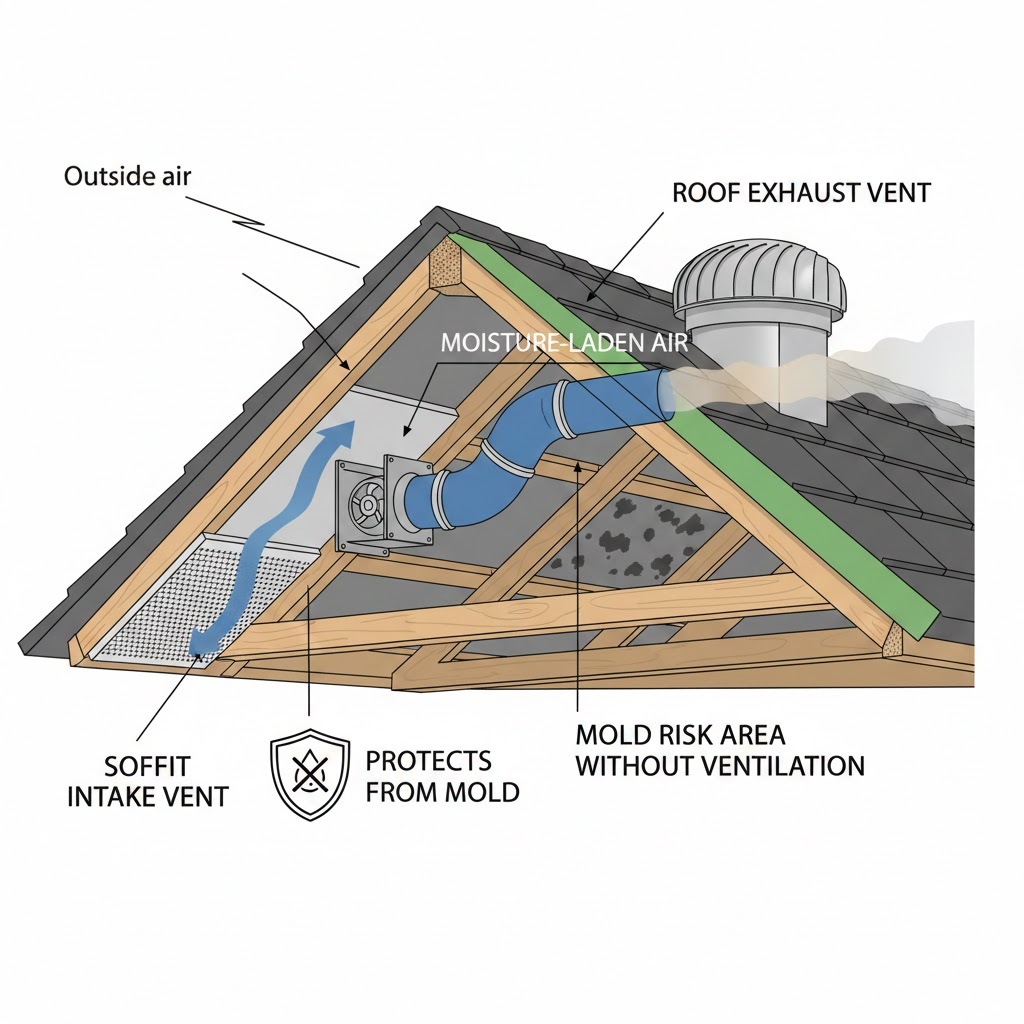
Proper attic ventilation is the first line of defense against hidden moisture, mold, and costly structural damage. When humid air from bathrooms, kitchens, and laundry rooms is not exhausted correctly, it lingers in the attic and slowly saturates wood, insulation, and roof decking.
A soffit exhaust vent for moisture control solves this by channeling humid air directly to the outside instead of letting it recirculate near passive intake vents. With a dedicated discharge path, moist exhaust air is pushed away from the soffit area, so it cannot be pulled back into the attic and create a mold-friendly environment.
The Moisture Flow® soffit vent is engineered specifically for this job, pairing with bathroom and kitchen fans to move moisture out with higher air velocity. Its precision plenum design separates exhaust air from normal soffit airflow, preventing cooler attic air from mixing with humid air and stopping vortex reactions that trap moisture.
When your soffit exhaust vent for moisture control is correctly installed, it supports a balanced system: cool, dry air enters at the soffits while hot, moist air exits through upper vents or fans. This reduces condensation on roof sheathing, stabilizes attic temperatures, and extends the life of shingles, framing, and insulation.
For homeowners in humid or mixed climates, upgrading to a high-quality soffit exhaust vent is one of the simplest ways to improve indoor air quality and protect against mold. By choosing a purpose-built product like the Moisture Flow® Soffit Vent, you turn every shower, cooking session, and laundry cycle into proactive moisture control instead of a hidden moisture problem.