
The Ultimate Guide to Hydroponics: Grow More in Less Space
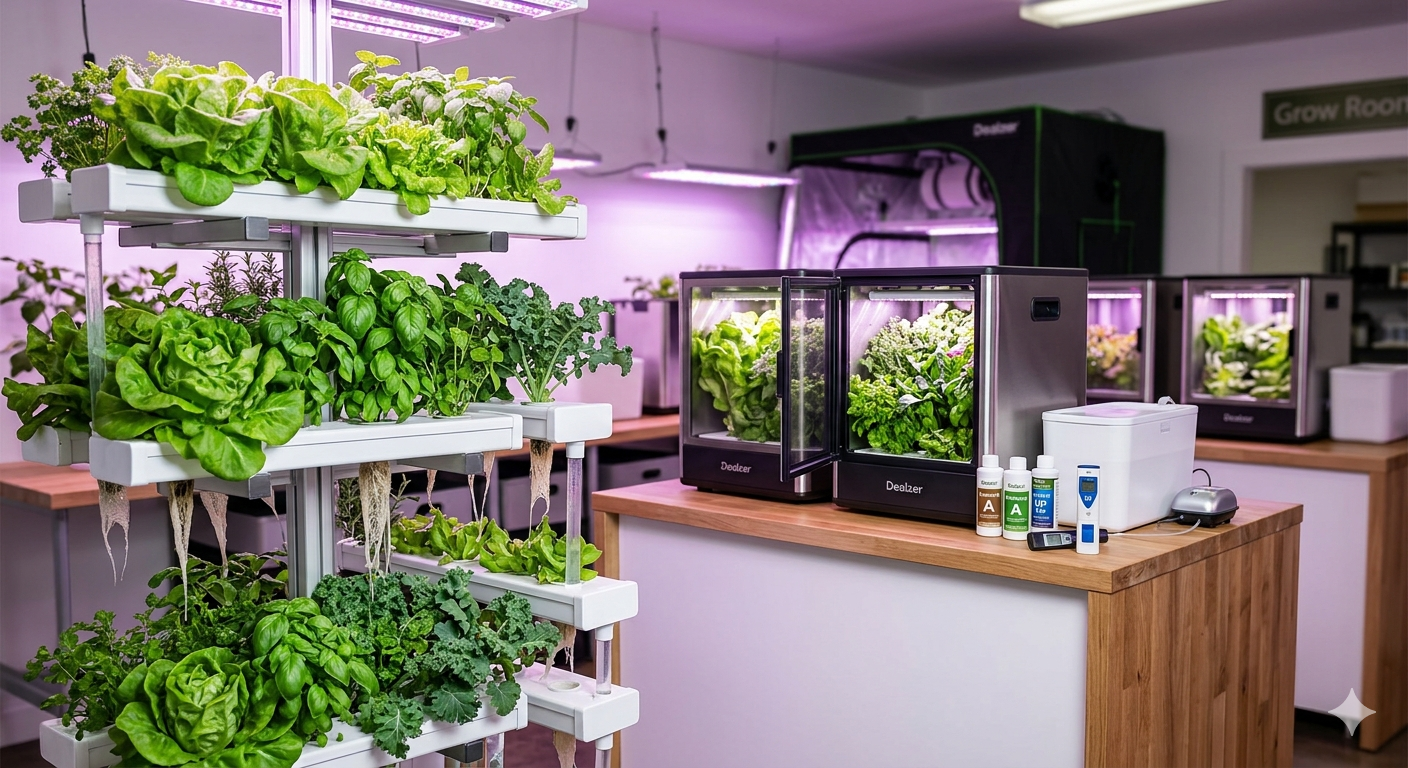
Hydroponics is no longer a niche hobby for tech enthusiasts or commercial farmers; it has become the gold standard for home gardeners who want total control over their food supply. At Dealzer.com, we’ve seen firsthand how transitioning from traditional soil to a hydroponic system can revolutionize your yields, flavor, and growing speed.
Whether you are looking to cultivate crisp lettuce, aromatic herbs, or heavy-blooming florals, understanding the mechanics of water-based gardening is your first step toward a perpetual harvest.
What is Hydroponics?
In its simplest form, hydroponics is a method of growing plants without soil. Instead of searching through the earth for nutrients, plants are submerged in or misted with a nutrient-rich water solution.
By removing the soil, you remove the "middleman." This allows the plant to spend less energy growing massive root systems to find food and more energy developing lush leaves and fruit.
Why Soil-Free is the Future
- Faster Growth: Plants typically grow 20–30% faster than in soil.
- Water Efficiency: Hydroponic systems use up to 90% less water because the water is recirculated.
- Space Optimization: Perfect for urban apartments or small spare rooms.
- No Pests: Most soil-borne pests and diseases are eliminated entirely.
The Science Behind the Magic
To master hydroponics, you have to think like a plant. A plant needs four basic things: light, water, carbon dioxide, and nutrients. In a traditional garden, soil acts as a reservoir for these nutrients. In hydroponics, we use a growing medium to support the plant's weight and a nutrient solution to deliver the goods.
The Role of pH and EC
In soil, you have some "wiggle room." In hydroponics, precision is key. You will need to monitor two main metrics:
- pH Levels: Most hydroponic plants thrive in a slightly acidic environment, typically between 5.5 and 6.5. If the pH is off, "nutrient lockout" occurs, and the plant cannot absorb food even if it's sitting right in it.
- Electrical Conductivity (EC): This measures the concentration of salts (nutrients) in your water. Too high, and you burn the roots; too low, and the plant starves.
Popular Types of Hydroponic Systems
Choosing the right system depends on your experience level and the types of plants you want to grow. Here are the most common setups found at Dealzer:
1. Deep Water Culture (DWC)
This is the most popular entry point for beginners. The plant sits in a net pot suspended over a reservoir of oxygenated nutrient solution. An air stone (like in a fish tank) keeps the roots from "drowning."
- Best for: Tomatoes, peppers, and large "heavy feeders."
2. Nutrient Film Technique (NFT)
A constant, very thin stream (a "film") of nutrient solution flows over the roots in a tilted tray or pipe.
- Best for: Lettuce, spinach, and herbs.
3. Ebb and Flow (Flood and Drain)
The grow tray is periodically flooded with nutrients and then drained back into a reservoir. This pulls fresh oxygen into the root zone as the water recedes.
- Best for: Diverse gardens where you have plants of different sizes.
4. Aeroponics
The most advanced method. Roots hang in the air and are misted with a fine nutrient spray every few minutes.
- Best for: Maximum growth speed and cloning.
Essential Components for Your Setup
If you’re building your own or looking at one of our all-in-one grow boxes, here is the checklist of what you'll need:
| Component | Function | Why It Matters |
| Grow Lights | Replaces the sun | LED or HPS lights provide the specific spectrum for growth. |
| Reservoir | Holds the water | Needs to be opaque to prevent algae growth. |
| Submersible Pump | Moves the water | Essential for NFT and Ebb & Flow systems. |
| Air Pump & Stone | Oxygenates the water | Prevents root rot and keeps the plant breathing. |
| Growing Medium | Supports the plant | Options include Rockwool, Clay Pebbles (Hydroton), or Coco Coir. |
Choosing the Right Nutrients
You can’t just use standard Miracle-Gro in a hydroponic system. Soil fertilizers lack the micronutrients (like Calcium, Magnesium, and Iron) that are usually found naturally in the earth.
Look for a three-part nutrient series (Grow, Bloom, and Micro). This allows you to adjust the ratios as your plant moves from its "teenage" leafy stage into its "adult" flowering stage.
Common Mistakes to Avoid
Even the best growers hit a snag now and then. Here’s how to avoid the most common hydroponic pitfalls:
- Ignoring Water Temperature: If your water gets too warm (above 75°F), it loses its ability to hold oxygen, leading to Pythium (Root Rot). Keep your reservoir cool!
- Light Leaks: Light hitting your nutrient solution equals algae. Algae steals nutrients and clogs pumps. Ensure your reservoir is light-proof.
- Forgetting to Flush: Over time, salts build up in your growing medium. Every few weeks, flush your system with plain, pH-balanced water to "reset" the environment.
- Poor Ventilation: Plants "breathe" $CO_2$. Without an exhaust fan or oscillating fan, the air around the leaves becomes stagnant, slowing growth and inviting mold.
Why Buy from Dealzer?
At Dealzer.com, we’ve spent years perfecting the art of the "plug-and-play" garden. We know that the barrier to entry for hydroponics can feel high because of the technical gear involved. That’s why we specialize in:
- Stealth Grow Boxes: Fully automated, self-contained systems that look like high-end furniture.
- Expert Support: We don't just sell you a box; we help you grow.
- Quality Components: We use professional-grade LEDs and quiet pumps so your hobby doesn't take over your living room.
Summary: Your Path to a Green Thumb
Hydroponics is the ultimate marriage of biology and technology. By controlling the environment, you remove the variables that cause crops to fail in the "great outdoors." No droughts, no unexpected frosts, and no hungry rabbits.
Whether you start with a simple DWC bucket or a multi-chamber aeroponic tower, the result is the same: cleaner, faster, and more potent yields.
Ready to start your hydroponic journey? Explore our
FAQ
Is hydroponic food organic?
While it can be, it depends on the nutrients you use. Many growers use organic-based liquid nutrients to achieve a harvest that is even cleaner than "organic" soil crops.
Does hydroponic produce taste different?
Actually, because you are providing the exact mineral profile the plant needs, many people find hydroponic fruits and vegetables to be more flavorful and nutrient-dense than store-bought counterparts.
How much time does it take?
Once your system is dialed in, it usually takes about 15–20 minutes a week to check pH levels and top off the reservoir. It is much less labor-intensive than weeding and tilling a traditional garden.
Recent Posts
-
The Ultimate Guide to Hydroponics: Grow More in Less Space
Hydroponics is no longer a niche hobby for tech enthusiasts or commercial farmers; it has become th …7th Apr 2026 -
Grow Your Own Food: A Simple Guide to Hydroponics
Discover the Power of Hydroponics Imagine having a garden that grows fresh, flavorful food year-rou …7th Apr 2026 -
Why Moisture Problems Rarely Have Just One Cause
Homeowners often go hunting for a single leak or product failure when they notice musty smells, fog …9th Jan 2026