 Loading... Please wait...



Save Money. Grow Your Own!
Fast Plain Box Shipping.
We ship to the US & Canada.
Grow Your Own!
Why Moisture Problems Rarely Have Just One Cause
Posted on 9th Jan 2026
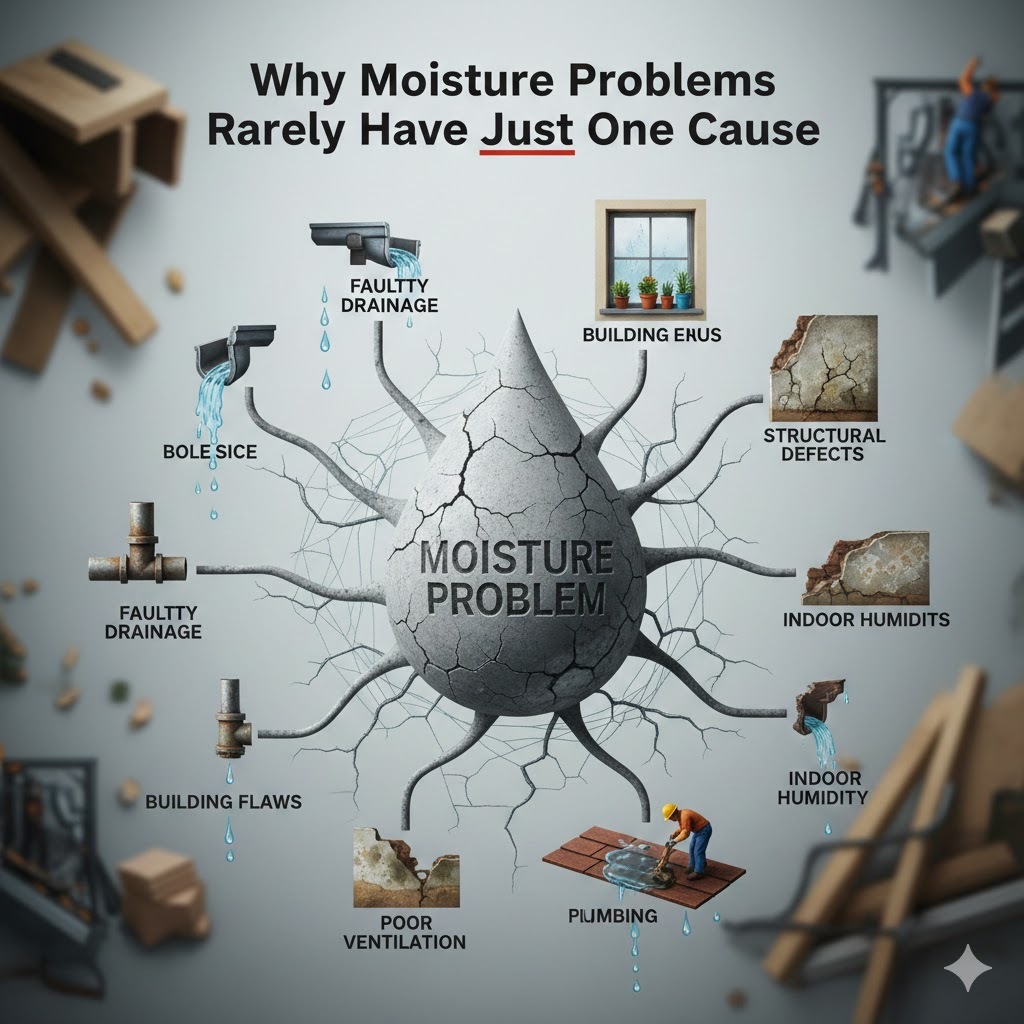
Homeowners often go hunting for a single leak or product failure when they notice musty smells, fogged windows, or peeling paint. In reality, indoor moisture problems usually come from a stack of small issues that build up over time. Understanding how everyday routines, hidden leaks, and design flaws work together is the first step toward keeping your home dry, comfortable, and healthy.
Moisture is always moving. It evaporates from wet surfaces, rides along with warm air, and condenses again on the coldest materials in the house. When that cycle repeats every day in the same places, you start to see stains, mold spots, and damage that cleaning alone cannot fix. That is why it is so important to look at moisture as a system issue instead of a single event.
One especially useful overview of this big‑picture approach is the article “10 Ways Moisture Builds Up in Your House” on Moisture Flow’s blog, which breaks down the most common daily sources of indoor humidity and how they interact.
Everyday Habits That Quietly Raise Indoor Moisture
Most of the moisture in a typical home comes from what happens inside the walls, not outside. Long, hot showers, boiling pots on the stove, running a dishwasher, and drying clothes indoors all release water vapor into the air. If that air is not exhausted to the outside or dried by a well‑sized HVAC system, the moisture lingers and slowly raises the background humidity level in the home.
What makes these routine activities tricky is that they rarely cause a problem on their own. A quick shower or a single pot of boiling water won’t destroy a bathroom or kitchen. Instead, moisture builds up day after day, especially in corners and surfaces that never completely dry. Over time, that constant dampness is what supports mold growth and damages paint, trim, and drywall.
A good rule of thumb is simple: any activity that creates steam, damp surfaces, or standing water needs a way for moisture to escape. That can be as basic as running a vented exhaust fan, cracking a window during and after a shower, or making sure a clothes dryer is properly vented outdoors instead of into a crawl space or garage.
Hidden Building Details That Trap Moisture
Even if your daily habits are good, building details can work against you. Poorly insulated exterior walls, single‑pane windows, and uninsulated metal ducts all act as cold surfaces inside a warm, humid home. Moist air naturally cools when it touches those surfaces, and the water it carries condenses, leaving beads of moisture and damp streaks behind.
Basements and crawl spaces are another common source of hidden moisture. When soil drains poorly or gutters dump water against the foundation, concrete can wick that moisture indoors. The space under the house may never feel truly dry, and the damp air can move upward into living areas through gaps and cracks. From the homeowner’s perspective, this can look like random moisture problems on the first floor, when the real issue lives below.
Roof leaks and window flashing errors create a similar effect from above. Even small openings can let water in during storms, where it soaks insulation and structural wood. Because these areas are out of sight, the first visible sign might be a faint stain or a musty smell in a closet. By the time the leak is obvious, the affected materials may have been wet on and off for months or years.
Why Referencing Moisture Research Matters
When you are trying to diagnose moisture issues in a specific home, it helps to lean on sources that organize the problem into clear, repeatable patterns. That is exactly what the Moisture Flow article does: instead of focusing on one dramatic failure, it catalogues the ten most common ways moisture tends to accumulate and shows how they connect.
Citing a resource like that has two benefits. First, it gives homeowners confidence that they are not dealing with a mysterious or one‑off problem; they are experiencing known moisture patterns that have known solutions. Second, it encourages a more methodical approach: check the obvious daily moisture sources, then move on to ventilation, insulation, and hidden leaks in a logical order.
When mentioning the article on your own site, you can introduce it the way you would any other expert source: briefly describe the key takeaway, link on a relevant keyword phrase, and make it clear that you are directing readers to a deeper breakdown of how moisture builds up in real homes.
How to Work This Into Your Own Content
If this blog will live on a different site, you can position it as a general guide to moisture awareness that points readers toward more detailed reading. Early in the article, mention that a comprehensive breakdown already exists and link directly to it. Later in the piece, you can build on those ideas with local examples, product recommendations, or services that your own site offers.
Used this way, a citation does more than send traffic away. It signals that your content is grounded in broader research, and it lets you focus on what you do best—connecting the big moisture picture to practical next steps for your particular audience.